
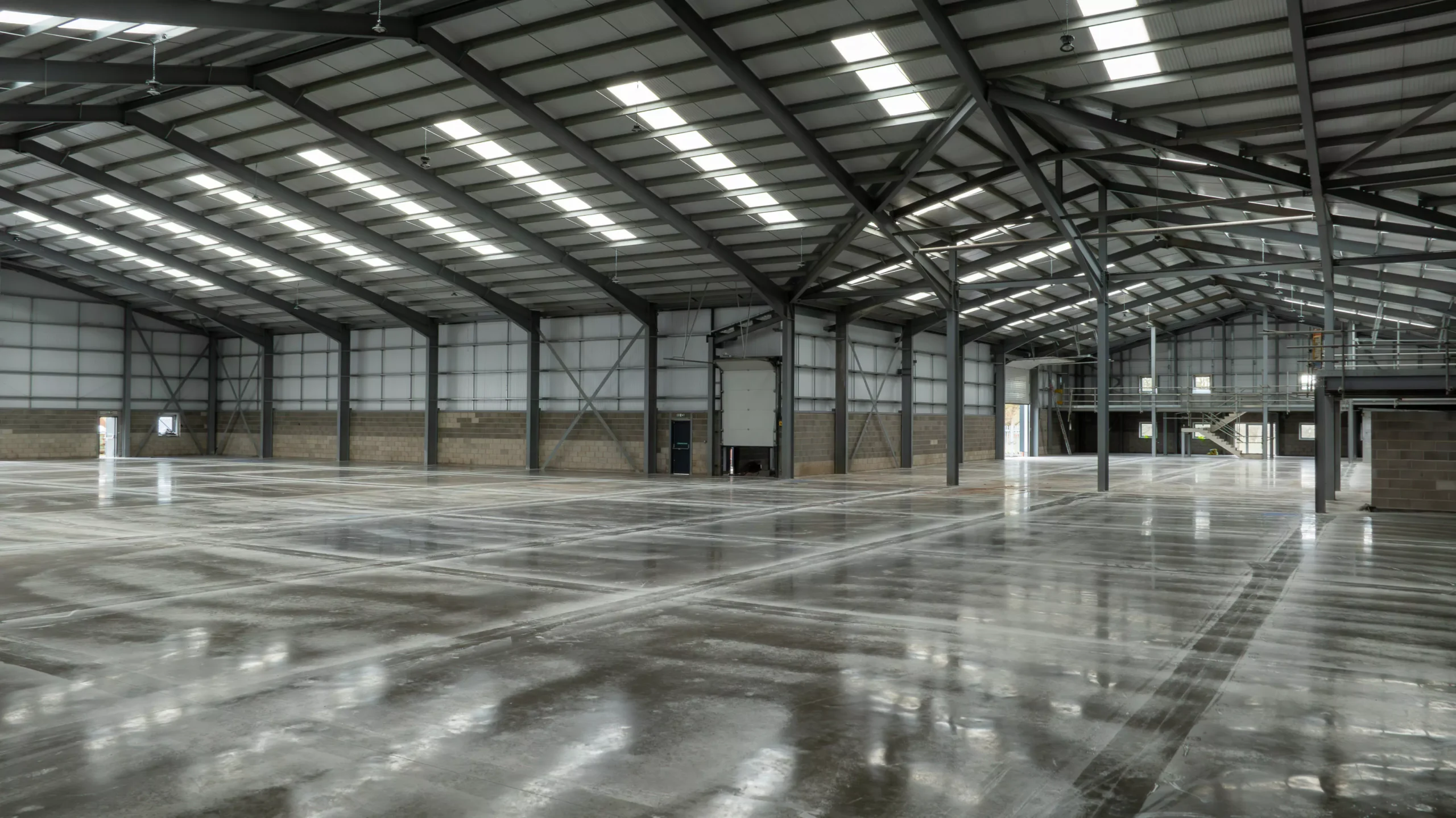
Your commercial concrete flooring has to stand up to constant use and still be fit for purpose. That can be a tough ask in a busy warehouse or logistics centre. Upgrading to a polished concrete floor can help.
Polished concrete flooring has a smooth, level surface that’s much easier to clean and maintain. Better yet, polished concrete is much stronger and more durable, with a modern aesthetic that gives your warehouse a polished and professional look.
Interested in knowing how to polish concrete floors? Here’s how:
Do You Need To Polish Concrete?
Polishing is just one way to finish your concrete floor. Sealers generally do a good job of protecting your floor against spills and stains and can be used in a fraction of the time it takes to complete a polished concrete floor.
The drawback is that sealants can scratch and show wear quickly — plus, they can be slippery when wet. Although the upfront costs may be higher, polished industrial concrete flooring has a better RoI in the long run, boasting a 25+ year lifespan.
What Are The Benefits Of Polishing Concrete?
Polishing concrete densifies the surface and minimises porosity — no more stains from oil spills and other contaminants. The increased strength also increases impact resistance, so your warehouse floor can withstand constant traffic for years to come.
Although it sounds counter-intuitive, the polishing process also increases friction to minimise slips and falls. Your floors may look smooth and shiny, but they’re safe and slip-resistant.
Your finished floor only needs minimal upkeep and doesn’t require hazardous chemical cleaners or coatings. It’s also an energy-efficient and eco-friendly option that meets your sustainability targets.
How To Prepare Concrete Flooring For Polishing?
Preparation is the key to a great result. Before your floor can be polished, it must be scrupulously cleaned to remove any polish, sealer or stains. This process helps to reveal any chips or cracks that need sealing and any embedded objects that need removing.
At this stage, your floor is tested for hardness. This process determines which grinding discs can be used to achieve the perfect result.
If you’re polishing a newly poured concrete slab, you should wait at least 28 days until the concrete is fully cured.
How To Polish A Concrete Floor: Step By Step
Polishing a concrete floor is a relatively straightforward process. However, a professional service is best if you need a hardwearing, durable finish.
We’ve broken it down into three simple steps:
- Polish with an abrasive disc: Start in the furthest corner of the room, then work slowly across the floor, covering every inch. You should pay close attention to getting rid of stains and polishing out uneven areas for a smooth, level finish. Now, repeat the process with a fine abrasive disc.
- Use a densifier: Spray on a densifier to make your floor impermeable, then follow up with a 1500 extra-fine grit disc to get that polished sheen. Use a wet-dry vac to gather dust and debris before proceeding to the final step.
- Buff and seal: Using a burnishing pad, work across the floor from the furthest corner, using a semi-circular sweeping motion. Apply a concrete sealer if required, according to the directions, and let it dry 24-72 hours before giving your floor its final buff and shine.
For the best polished floors, start with high-quality concrete
The best projects start with quality materials and technology. At Technic Concrete Floors, we’re concrete specialists who can advise you on the best aggregates and reinforcements for an impeccable finish. Take a look at our gallery for inspiration. And if you’re interested in a durable finish for your warehouse concrete floors, please contact the team today.