
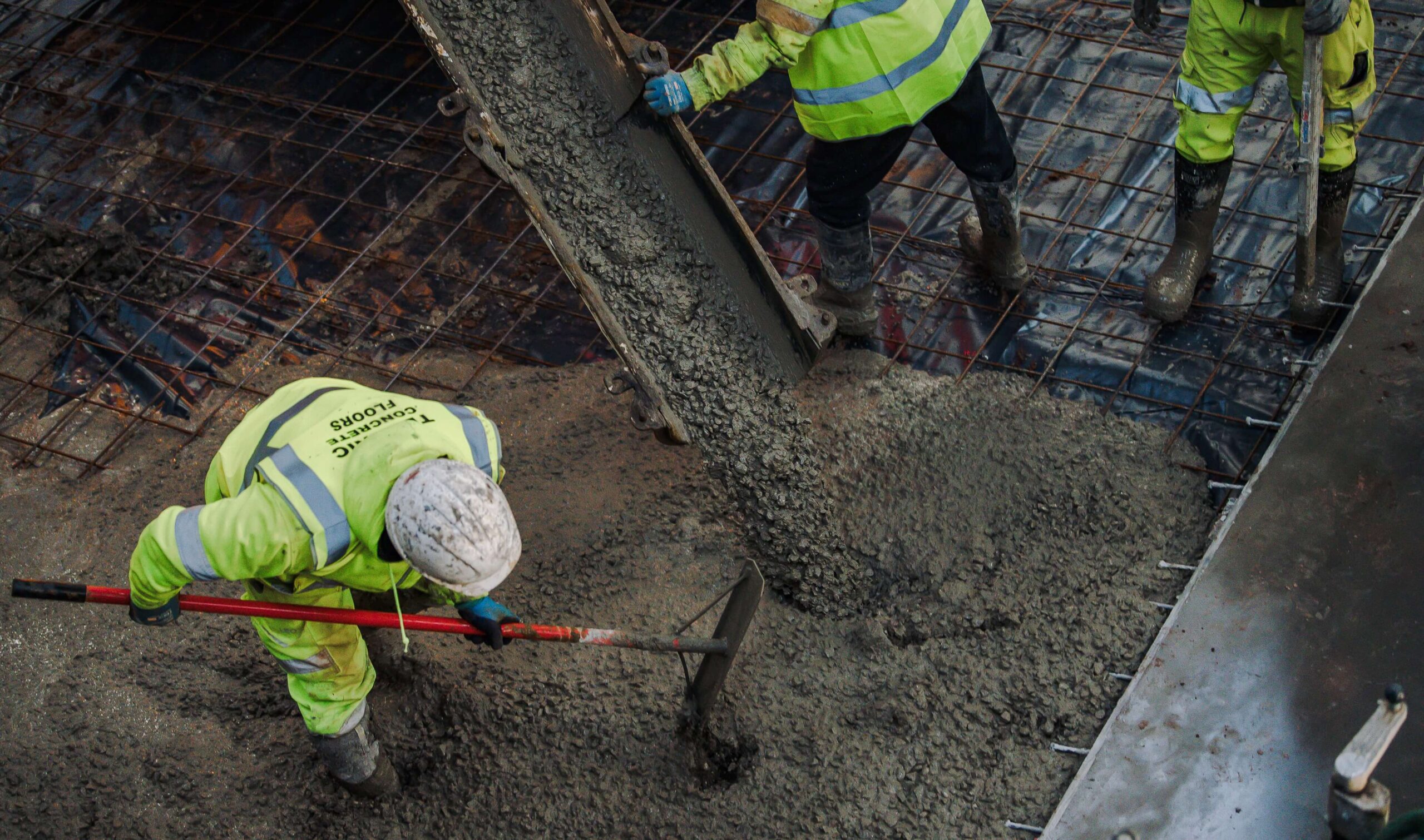
Concrete flooring is used across commercial and industrial settings because it offers strength, reliability and long service life. Many people still use the words cement and concrete as if they mean the same thing, although the two materials play very different roles. The difference matters when planning a new floor, choosing the right specification or understanding how each stage of installation affects long term performance.
This guide explains how cement behaves, how concrete forms the floor, and why every industrial and commercial concrete flooring project relies on careful planning, proper reinforcement, and precise installation rather than the materials alone.
What Cement Brings To The Mix
Cement works as the binding component that holds the full mixture together. Water activates the cement, which then begins the chemical process that forms the structure within the concrete. Although the reaction is powerful, cement doesn’t have the durability or density to create flooring on its own. It lacks the strength needed for commercial and industrial loads and cannot resist wear, abrasion or heavy traffic. Cement simply provides the base that allows the complete mixture to harden into a usable surface.
The quality of cement and the way it’s handled influence the final performance of the slab. Moisture levels, storage conditions and the water ratio all affect the setting time and the overall stability of the concrete. This early stage is often overlooked, yet it plays a major role in the reliability of the finished floor.
How Concrete Flooring Is Created
Concrete flooring is the result of combining cement with aggregates, water and reinforcement. Aggregates shape the bulk of the slab and help control shrinkage, while the reinforcement supports the loads placed on the floor. The mix design changes depending on the project. Industrial environments often need a stronger mix with higher reinforcement levels to support racking, forklifts and machinery. Commercial sites may prioritise surface regularity, appearance and cleaning efficiency.
Our work across commercial concrete flooring and industrial concrete flooring involves planning the mix, preparing reinforcement through concrete steel fixing, achieving accuracy through concrete laser screed placement and confirming strength through concrete cube testing. These stages ensure the floor can withstand the conditions it faces throughout its service life.
Internal Concrete Flooring Requirements
Internal concrete floors rely on consistent flatness and stability. Most commercial buildings rely on concrete because it provides a level surface for racking and equipment. Warehouses, supermarkets, schools, logistics facilities and factories all depend on predictable performance. The conditions inside the building allow the concrete to be designed around load patterns, movement paths and the type of machinery used on the surface.
Our internal concrete flooring services follow a planned approach that ensures every area of the slab meets the specification. Early coordination helps avoid delays and ensures that curing, finishing and testing are completed without disruption to the wider build programme.
External Concrete Flooring Requirements
External concrete floors face a different set of challenges. Temperature changes, frost, standing water and heavy vehicle movement place significant stress on outdoor slabs. The mix design, depth and reinforcement must all reflect these demands. Flexibility in the slab and controlled joint layouts help prevent cracking and movement created by the weather.
Our external concrete flooring installations are designed to deliver strength and durability in open environments. The right combination of reinforcement, surface finish and joint layout supports long term performance and reduces the risk of surface damage.
How Placement & Finishing Shape The Final Floor
Concrete flooring relies on accurate placement. Modern equipment improves consistency and surface accuracy, which is why our teams use concrete laser screed machines across many commercial installations. This approach ensures a controlled finish and helps meet strict flatness targets.
Once the concrete has been placed, other processes support the structural performance. Concrete saw cutting creates joints that help control the natural movement of the slab as it cures. These joints reduce the risk of uncontrolled cracking and help maintain a clean, stable surface. Many projects also involve decking when the floor is part of a suspended structure, which requires additional coordination and accuracy.
Why Cement & Concrete Must Never Be Confused
Cement plays an essential role in the creation of concrete, although it’s only one part of the system. Concrete flooring succeeds because of the balance between materials, reinforcement, placement and finishing. Mixing the terms leads to misunderstandings about the durability and purpose of each material. Concrete is the final product that creates the hard wearing surface seen across commercial and industrial buildings. Cement simply supports the chemistry behind that transformation.
Bringing Your Concrete Flooring Plans Together
Understanding the difference between cement and concrete ensures your floor performs as expected. Cement provides the binding element, while concrete delivers the strength, durability and stability required for commercial and industrial sites. Every successful floor relies on correct mix design, reinforcement, accurate placement and quality control.
Our team supports internal and external concrete floors with precise concrete laser screed placement, controlled concrete saw cutting and expert concrete steel fixing. We manage every stage safely and efficiently, giving you a reliable, long-lasting finish.
Clients choose us for technical expertise, consistent quality and nationwide project delivery. For personalised advice, call us on 01942 679100, email us at info@technicfloors.co.uk or fill in our online contact form. We can guide you from planning to installation, ensuring your concrete floor meets every requirement.
To ensure optimal results from the very start, many commercial and industrial projects also benefit from professional concrete pumping, which allows for accurate, efficient placement of concrete even in hard-to-reach areas.