
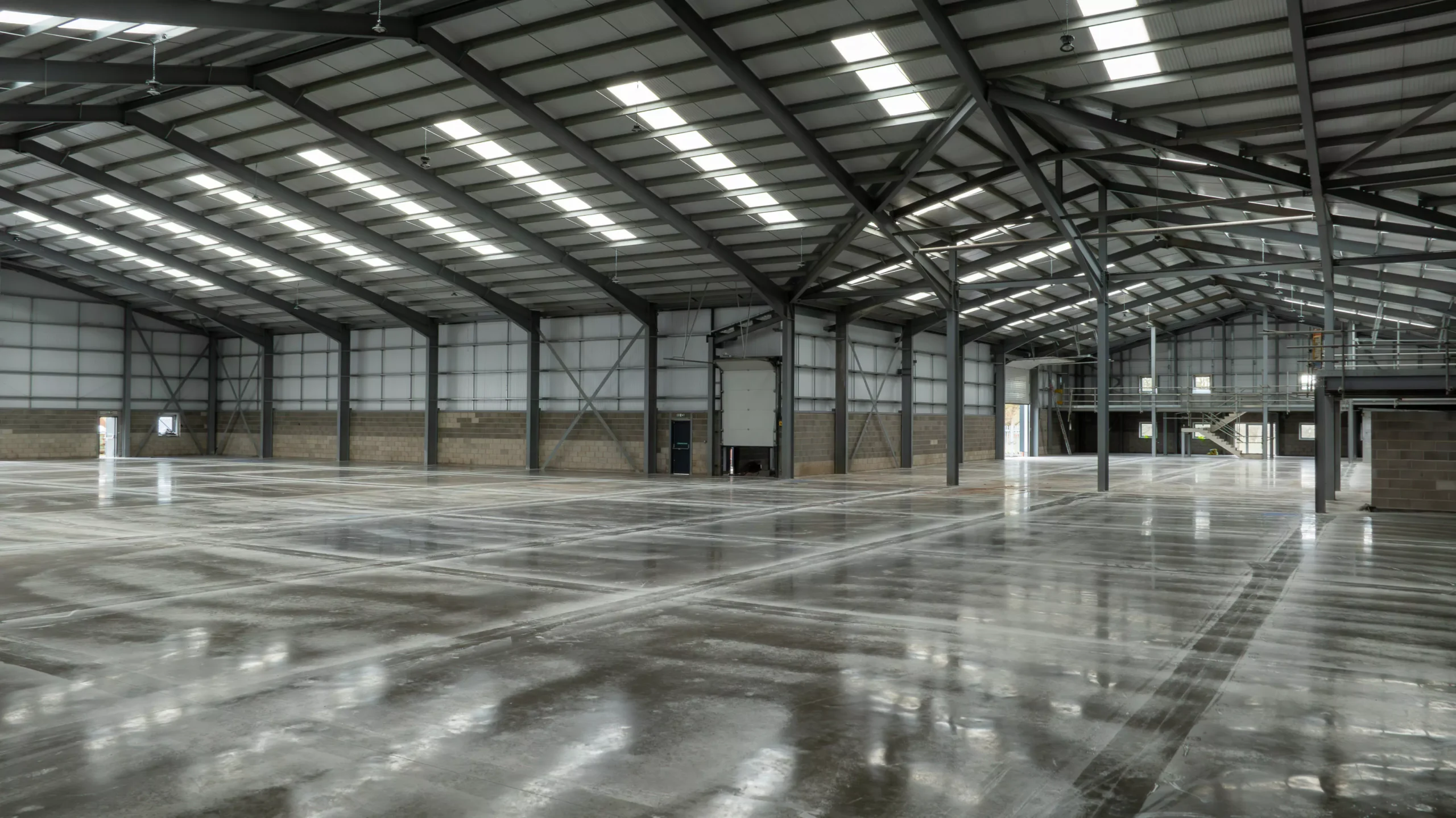
Knowing how to fix cracks in concrete floor surfaces is important on any commercial or industrial project. Cracks can appear for several reasons, and not every crack means the floor has failed. In many cases the issue can be controlled, repaired, or prevented with the right preparation and installation methods. Understanding why cracks appear and how they should be handled helps contractors and project managers protect the long term performance of the slab.
Concrete floors used in warehouses, factories, retail units, and logistics buildings are designed to carry heavy loads and constant traffic. When cracks develop, the first step is to identify the cause rather than rushing into repairs. In commercial construction, the quality of the original installation often determines how easy the repair will be.
Why Cracks Appear In Concrete Floors
Concrete naturally shrinks as it cures. This movement is expected, which is why slabs are designed with joints and reinforcement to control where cracking happens. Problems usually appear when the floor has not been prepared correctly or when the slab is placed without proper planning.
Common causes include ground movement, poor reinforcement, incorrect curing, or joints that have not been cut at the right time. Heavy traffic and high loading can also expose weaknesses in the slab. This is why most commercial projects rely on experienced contractors who understand the full process behind commercial concrete flooring rather than focusing only on the final finish.
Our work across industrial and commercial builds shows that early planning has a direct effect on how the floor behaves later. Reinforcement, bay layout, curing conditions and testing all play a part in preventing cracks before they start.
Identifying The Type Of Crack
Not every crack needs the same repair. Hairline cracks caused by shrinkage are common and often expected. Larger cracks may indicate movement in the base or a structural issue within the slab. Understanding the difference helps decide whether a simple repair is enough or whether further work is needed.
Surface cracks can often be filled or sealed, while deeper cracks may require cutting, cleaning and refilling to restore strength. In busy environments such as warehouses or production areas, damaged joints and cracks can lead to further wear if they are left untreated.
When floors are installed with proper reinforcement through concrete steel fixing, the risk of structural cracking is reduced. Correct placement of steel allows the slab to handle load changes without breaking down under pressure.
The Role Of Joints In Preventing Damage
Concrete floors are designed to move slightly as they cure. This is controlled by forming joints in the slab so that cracks appear in planned positions rather than randomly across the surface. When joints are missing or cut too late, cracks often develop in the wrong place.
Our concrete saw cutting service is used to create accurate joints at the correct stage of curing. These joints allow the slab to move without causing damage to the surface. Where cracking has already occurred, repairs often involve cutting the crack cleanly before filling it so that the floor can continue to perform safely.
Good joint layout is especially important on large internal slabs where traffic levels are high. It also plays a part in external yards and service areas where weather and loading place extra stress on the concrete.
Repairing Cracks Without Affecting Performance
Repair work should always take into account how the floor is used. Filling a crack without understanding the cause may hide the problem but will not stop it returning. In commercial environments, repairs need to support the strength of the slab as well as the surface finish.
Minor cracks can often be repaired with resin or specialist fillers, followed by sealing to protect the area. Larger cracks may need sections to be cut out and replaced. Where movement is still expected, flexible repair materials may be required to prevent further damage.
Floors that have been installed using concrete laser screed methods often perform better over time because the slab has been placed evenly and to the correct tolerance. Accurate placement reduces weak spots that can lead to cracking later.
Why Testing & Preparation Matter
The best way to fix cracks in concrete floor surfaces is to avoid them during construction. Quality control at the time of installation makes a significant difference to long term performance.
Testing through concrete cube testing confirms that the concrete has reached the required strength. This gives confidence that the slab will cope with the loads it was designed for. When testing, reinforcement and curing are all carried out correctly, cracking is far less likely to become a serious problem.
Preparation of the base is equally important. Internal slabs must sit on stable ground, while internal concrete flooring and external concrete flooring both need the correct specification for the environment they will face.
On larger or multi storey builds, the use of decking systems and structural slabs also affects how the concrete behaves. Careful coordination during these stages helps prevent movement that could lead to cracking later.
When To Speak To A Concrete Flooring Specialist
Cracks in concrete floors should always be assessed properly before repair work begins. On commercial and industrial sites, the floor often supports equipment, vehicles, and storage systems, so any repair must protect the structure as well as the surface.
Technic Concrete Floors provides support from early design through to installation and testing. Our experience across large scale projects allows us to identify the cause of cracking and recommend the right solution. You can see examples of completed work in our projects and gallery, which show how correct preparation helps floors perform over time.
If you need advice on repairs or are planning a new slab, speak to our team for guidance. Call us on 01942 679100, email us at info@technicfloors.co.uk or fill in our online contact form to discuss your project. The right preparation at the start makes a lasting difference to how any concrete floor performs.