
Understanding the integrity of the construction materials you use is essential for getting the best results out of any building project. Concrete cube testing ensures you’re using a safe, high-quality product.
But what does concrete cube testing involve, and why is meeting British Standards BS EN 12390-2 and BS EN 12390-3 is so important? Let’s take a look at how concrete cube testing services can help you meet the needs of your design.
What Is A Concrete Cube Test?
There’s a reason concrete is such a prevalent building material — it’s impressively strong, customisable and durable. A concrete cube test accurately assesses the compressive strength of concrete to make sure it’s suitable for your construction project.
During a concrete cube test, experts will prepare, cure, and test a concrete specimen. We’ll look at how this is done shortly, but it’s also worth noting the significant benefits concrete cube testing can bring:
• Regulatory compliance reducing potential delays
• Demonstrating a commitment to quality that enhances your business reputation
• Reducing the risk of catastrophic structural failures
• Verifying BSI standards and providing evidence of quality assurance
When you buy concrete, you need to know that it’s a high-quality material that doesn’t cut corners. Concrete cube testing reassures you that you can depend on your building supplies and purchase with confidence.
Why Is It Important When Laying Concrete Floors?
Quality assurance is paramount for concrete flooring. The concrete cube test is tangible evidence that your chosen material meets British Standards and will meet your flooring needs.
Concrete floors depend on durability and structural integrity. Concrete cube testing lets you know that your chosen materials are up to the job.
How To Make Concrete Cubes For Testing
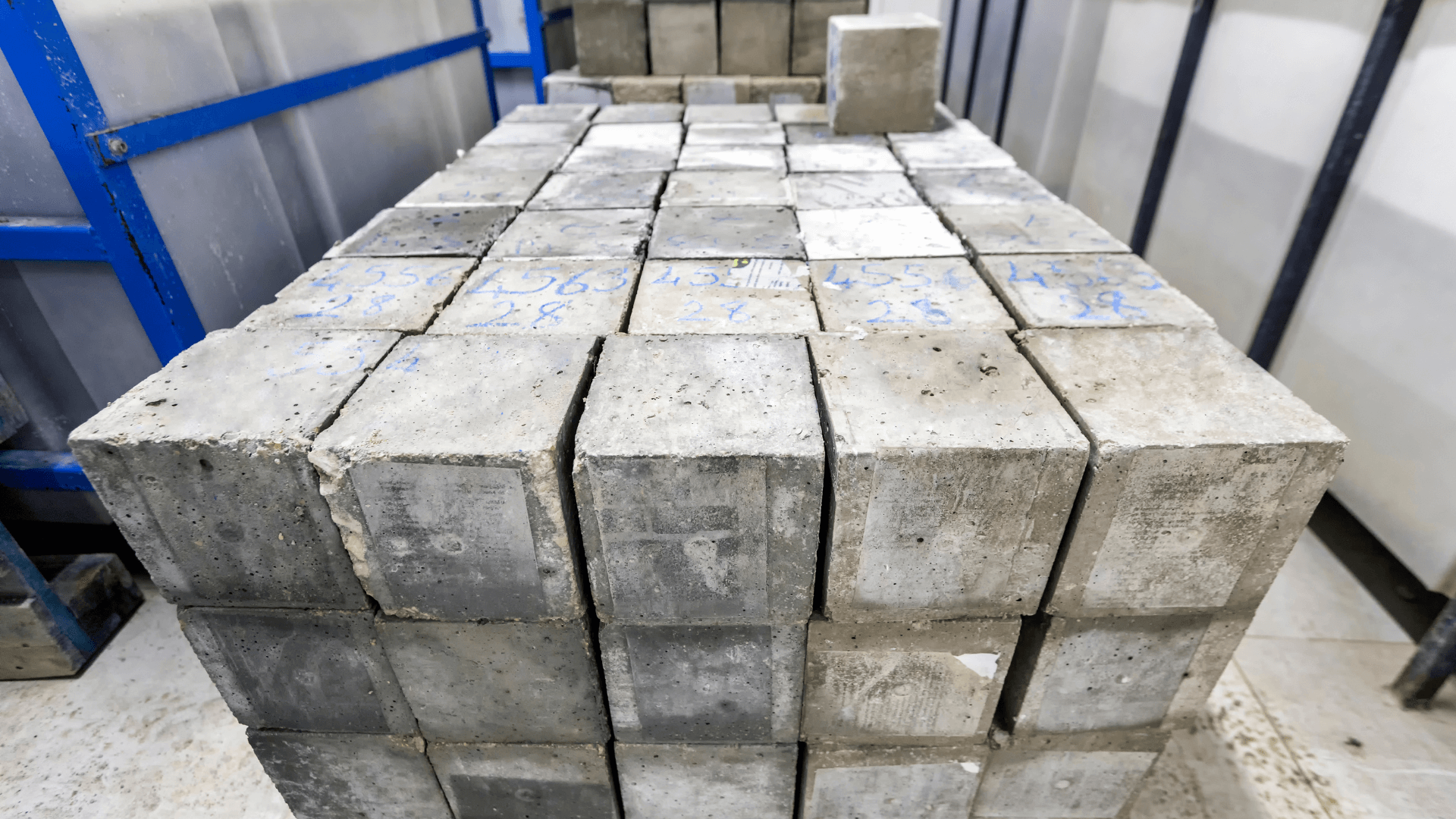
Before concrete can be tested, we first need to prepare and cure a series of concrete cubes. These are typically made in moulds measuring 100mm x 100mm x 100mm to 150mm x 150mm x 150mm, but the size varies depending on the aggregate mix.
Here’s how concrete cubes are prepared for testing:
1. First, we’ll create a concrete mix of cement, aggregates and water.
2. We’ll then pour the mix into two to three cube moulds before levelling and compacting it to BSI standards.
3. We’ll leave the cubes to set for 24 hours and then cure them in temperature-controlled conditions for up to four weeks.
How Many Cubes Do You Need For Concrete Testing?
The number of test cubes depends on the specifics of your construction project. However, there are some general guidelines followed by concrete cube testing companies:
• IS 456: For every 7㎥of concrete, three cubes should be cast for seven-day testing and six cubes for 28-day testing.
• BS EN 12350–1: Typically, three cubes should be sampled for every 50㎥ of concrete at 3, 7 and 28 day intervals.
How To Cube Test Concrete
The best way to test concrete’s compressive strength is to use a concrete cube crusher.
During the concrete cube test, we’ll use this crusher to see what the material can withstand before bending, cracking or becoming reduced or deformed in size. We’ll measure the
concrete cube’s compressive strength in Newtons per square metre.
Concrete should achieve 65% strength after seven days and full compressive strength after 28 days. Testing on days three, seven, and 28 will show that your chosen mix is developing as it should. Sometimes, we’ll carry out tests on day 14 and can even test at day 56 for ultimate confidence in your concrete’s durability.
Why Might You Need Concrete Cube Testing?
While a concrete cube test offers quality assurance, it also helps predict how different mixes perform under load conditions so you can make informed decisions about the right materials for your concrete floors.
Concrete Cube Testing Services From Technic
At Technic Floors, we provide comprehensive concrete cube testing services for your business. Whatever the concrete mix you need, we provide quality assurance for a durable and long-lasting result.
Looking for inspiration or need more information on concrete cube testing? Get in touch with our expert team to find out more.